This article may contain affiliate links. For more details, please refer to our disclosure.
Naritasan Shinshoji Temple is only 15 minutes by train from Narita Airport.
It’s a good option for a layover stop, or a half-day visit before heading into Tokyo.
The grounds are larger than they look on a map, with historic halls, seasonal gardens, and dedicated spots for seeking blessings.
A visit takes around 2 hours, or about 3 hours if you also walk along Omotesando Street and try some local food.
About Naritasan Shinshoji Temple
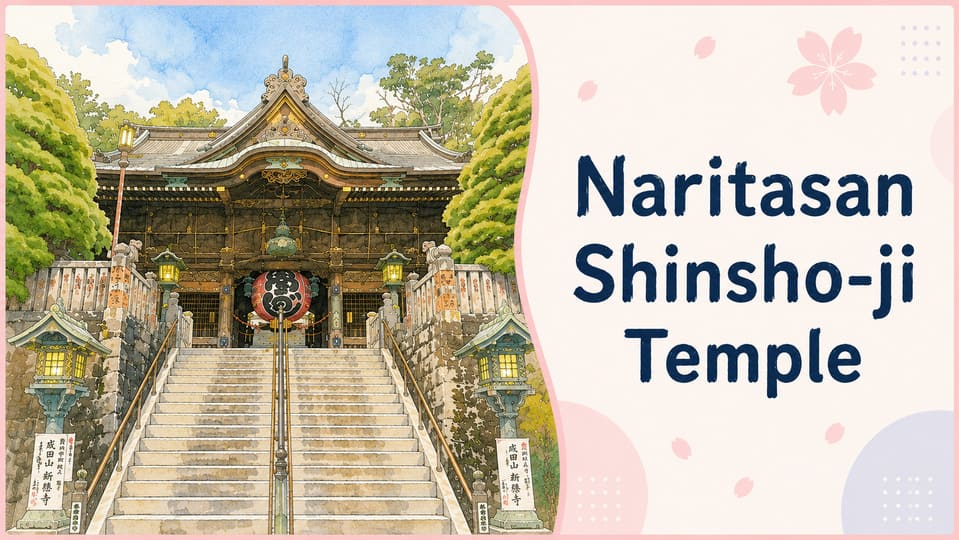
Naritasan Shinshoji Temple has been welcoming visitors for more than 1,000 years.
Rather than just a single main hall, the grounds are like a small town of their own, with large gates, historic halls, and peaceful paths to explore.
It’s a place where you can get a feel for traditional Japan without leaving the Narita area.
Main halls and cultural properties
Within the temple grounds, several historic buildings have been recognized as Nationally Important Cultural Properties. These halls and gates are among the main highlights for visitors:
| Name | Year Built | Description |
|---|---|---|
| Niomon Gate | 1830 | The main gate of the temple, guarded by two fierce statues. |
| Three-storied Pagoda | 1712 | A beautifully painted pagoda representing Buddhist teachings. |
| Main Hall (Daihon-do) | 1968 | The central worship hall, home to the temple’s main deity Fudo Myo-o. |
| Shakado Hall | 1858 | Dedicated to Buddha Shakyamuni, often used for meditation and worship. |
| Gakudo Hall | 1861 | The central hall for important ceremonies and events. |
| Komyodo Hall | 1701 | Known as the “Hall of Bright Light,” a space for prayer and meditation. |
Blessings at each hall
One of the distinctive features of Naritasan Shinshoji is that different halls are associated with different kinds of blessings. If you have something specific in mind, it helps to know where to go.

Daihondo Hall: comprehensive blessings
The Daihondo is the main hall of the temple, where Fudo Myo-o is enshrined. Visitors come here for a wide range of prayers, including family safety, business success, and safe travel.
The hall also holds Ogoma rituals, a traditional Buddhist fire ceremony where wooden sticks are burned to carry wishes to the deity. Rituals are held from 9:00am to 3:00pm.
Shusse Inari Shrine: business and career
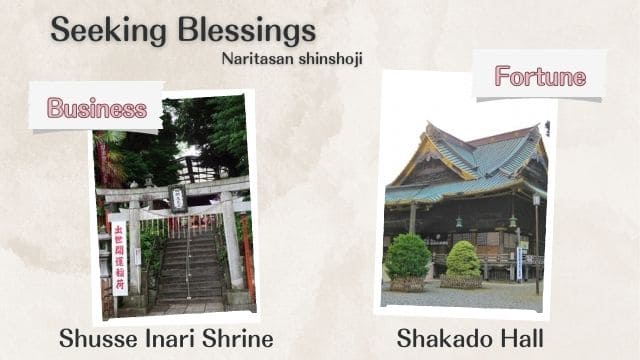
A short walk from the main hall leads to Shusse Inari Shrine. This is a popular spot for anyone seeking success in business, career advancement, or a fresh start. The fox, regarded as the messenger of the Inari deity, is depicted on the red ema (wooden wish plaques) sold here.
Shakado Hall: good fortune
Built in 1858, Shakado Hall enshrines Shakyamuni Buddha and is designated as a Nationally Important Cultural Property. It served as the main hall before the current Daihondo was built. Visitors come here to pray for good fortune and protection from bad luck. A prayer ritual is available for 7,000 yen, with no reservation required.
Komyodo Hall: love and relationships
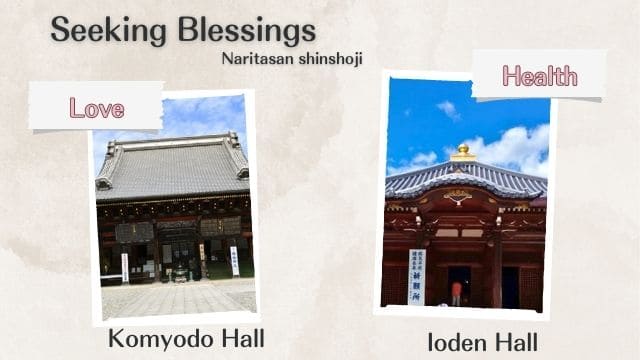
Constructed in 1701, Komyodo Hall is dedicated to Aizen Myo-o, a deity associated with love. It is a place to pray for romantic relationships, a happy marriage, and harmony within the family.
Ioden Hall: health and longevity
Built in 2017 to mark the 1,080th anniversary of the temple’s founding, Ioden Hall is dedicated to deities of medicine and healing. It is a place for prayers related to health, longevity, and recovery from illness.
Naritasan Park
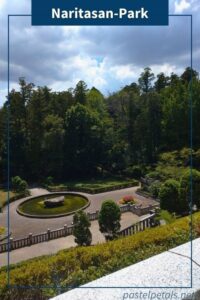
Naritasan Park is a vast green space behind the temple, about 3.5 times the size of Tokyo Dome.
With ponds, waterfalls, and seasonal scenery, it’s a good place to slow down and enjoy the surroundings.
When I visited in midsummer, the sunlight on the green leaves made the whole park glow vividly.
Naritasan Omotesando Street
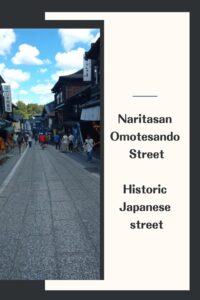
The approach to Naritasan Shinshoji Temple stretches about 800 meters from Narita Station. This historic street has been lively since the Edo period and still keeps its old-town charm today.
Along the way you’ll find more than 150 shops and restaurants. Here are some highlights to enjoy on Omotesando:
- Unagi (eel) dishes, a specialty of Narita.
- Japanese sweets and snacks, such as rice crackers and dumplings.
- Tea shops and cafés offering matcha and seasonal treats.
- Souvenir stores selling local crafts and gifts.
- The atmosphere of a street that has welcomed visitors for centuries.
How to access Naritasan Shinshoji Temple
Naritasan Shinshoji Temple is easy to reach from Narita Airport and central Tokyo. Here are the main options:
From Narita Airport
- JR Line: About 10 minutes to Narita Station, then a 15-minute walk to the temple.
- Keisei Line: About 10 minutes to Keisei Narita Station, then a 20-minute walk.
Planning to continue into Tokyo after your visit? → Check Narita Airport to Tokyo Station
From central Tokyo
- JR Narita Line from Tokyo Station: about 70 minutes.
- Keisei Skyliner from Ueno Station: about 60 minutes.
MAP: Location of Naritasan Shinshoji Temple
(15–20 minutes on foot from Narita/Keisei Narita Station)
The temple is within walking distance from both Narita and Keisei Narita stations, making it easy to visit from the airport.
Basic information of Naritasan Shinshoji
| Item | Details |
|---|---|
| Name | Naritasan Shinsho-ji |
| Address | 1 Narita, Narita City, Chiba Prefecture |
| Website | https://www.naritasan.or.jp/english/ |
| TEL | +81-476-22-2111 |
| Business hours | Grounds open 24 hours (Prayer and stamp reception hours: 8:00am – 4:00pm) |
| Closed | None |
| Admission | Free |
Summary
Naritasan Shinshoji Temple is one of the easiest cultural sites to visit near Narita Airport.
Within just a short train ride, you can experience over 1,000 years of history, explore quiet temple grounds and parks, and enjoy local food on Omotesando Street.
Whether you stop by during a layover or include it on your way to Tokyo, Naritasan offers a compact but memorable taste of traditional Japan.